
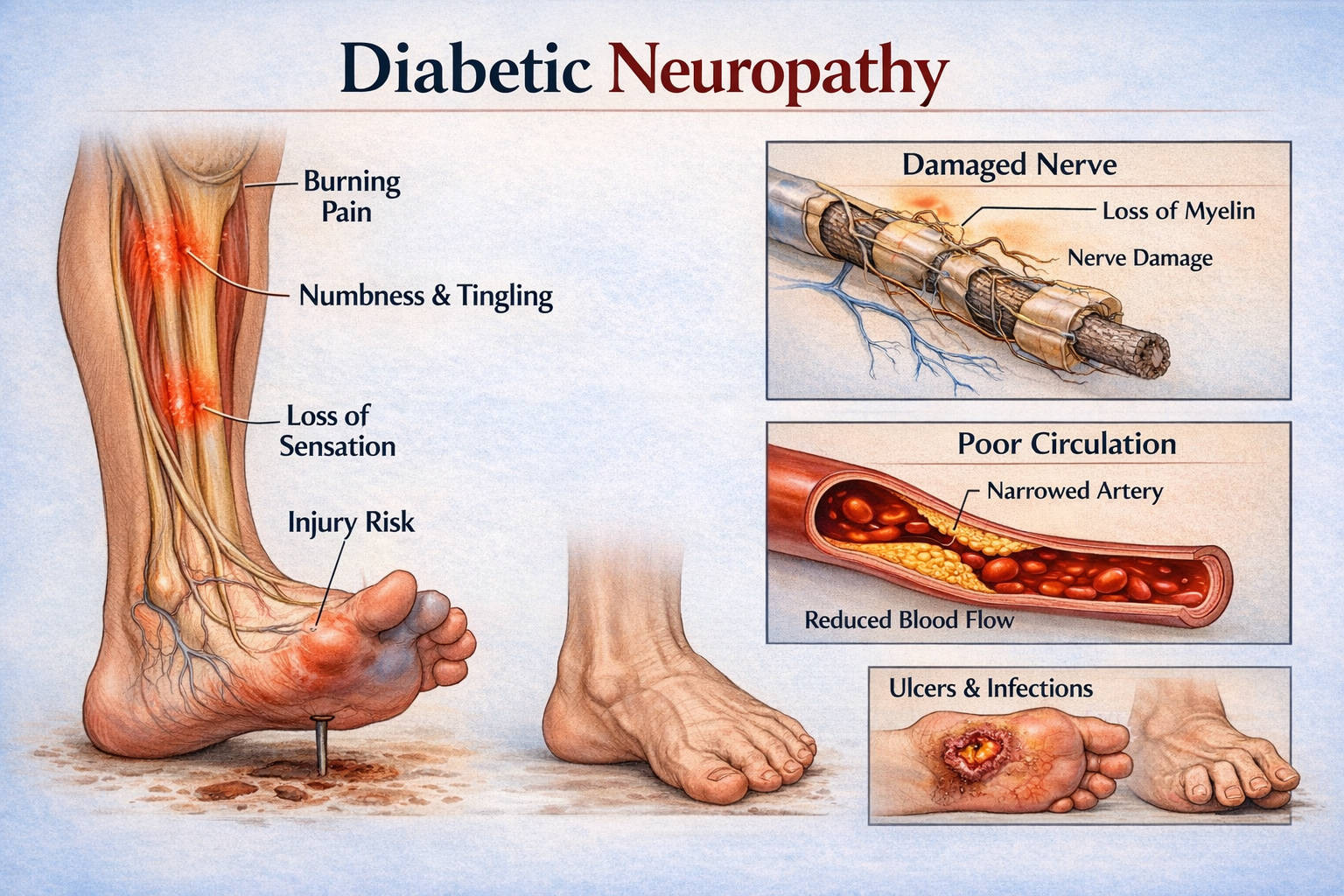
Diabetic neuropathy affects millions of people living with diabetes, causing symptoms such as numbness, tingling, burning sensations, and nerve pain in the feet and legs. One of the most important yet often overlooked strategies for managing neuropathy symptoms is improving circulation through movement.
Healthy blood flow delivers oxygen and nutrients to nerve tissue while helping remove inflammatory waste products. When circulation improves, nerve cells receive the support they need to function more effectively, potentially reducing neuropathy symptoms.
Exercise is one of the most effective ways to stimulate circulation naturally.
Why Circulation Matters for Neuropathy
Nerves depend on a constant supply of oxygen and nutrients delivered through the bloodstream. Diabetes can damage small blood vessels that supply nerves, reducing circulation to the extremities.
This reduced blood flow contributes to nerve damage and pain.
Movement stimulates the muscle pump, which helps push blood back toward the heart and improves microcirculation in the legs and feet.
Regular circulation exercises can help:
Improve oxygen delivery to nerves
Reduce swelling and inflammation
Support nerve repair
Improve balance and coordination
Reduce neuropathic pain
1. Walking
Walking is one of the simplest and most effective exercises for improving circulation.
When muscles contract during walking, they help move blood through the veins and arteries of the lower body.
Benefits include:
Improved vascular health
Enhanced glucose regulation
Increased oxygen delivery to nerves
Strengthened leg muscles
Even 10–20 minutes of walking daily can improve circulation.
2. Ankle Pumps
Ankle pumps are excellent for stimulating blood flow in the feet and lower legs.
How to perform:
Sit comfortably in a chair.
Extend one leg forward.
Flex your foot upward toward your body.
Point your toes downward.
Repeat for 20 repetitions.
This movement activates the calf muscles, which act as a secondary pump for circulation.
3. Toe Raises
Toe raises strengthen foot muscles and improve circulation in the lower extremities.
Instructions:
Stand behind a chair for support.
Slowly lift your heels off the ground.
Hold for 3 seconds.
Lower back down.
Repeat for 10–15 repetitions.
This exercise stimulates circulation while strengthening the muscles that support balance.
4. Seated Leg Extensions
Leg extensions activate the thigh muscles and improve blood flow throughout the legs.
How to perform:
Sit in a chair with feet flat on the floor.
Extend one leg straight.
Hold for 5 seconds.
Lower slowly.
Repeat 10–12 times per leg.
5. Foot Circles
Foot circles improve mobility and circulation in the ankles and feet.
Instructions:
Sit comfortably.
Lift one foot slightly off the floor.
Rotate the foot in circular motions.
Perform 10 circles in each direction.
This movement helps maintain joint mobility while stimulating circulation.
Exercise Safety for Neuropathy
People with diabetic neuropathy should take precautions when exercising.
Important guidelines include:
Wear supportive footwear
Check feet daily for injuries
Avoid high-impact activities if sensation is reduced
Start slowly and progress gradually
Consistent movement combined with proper care can significantly support circulation and nerve health.